
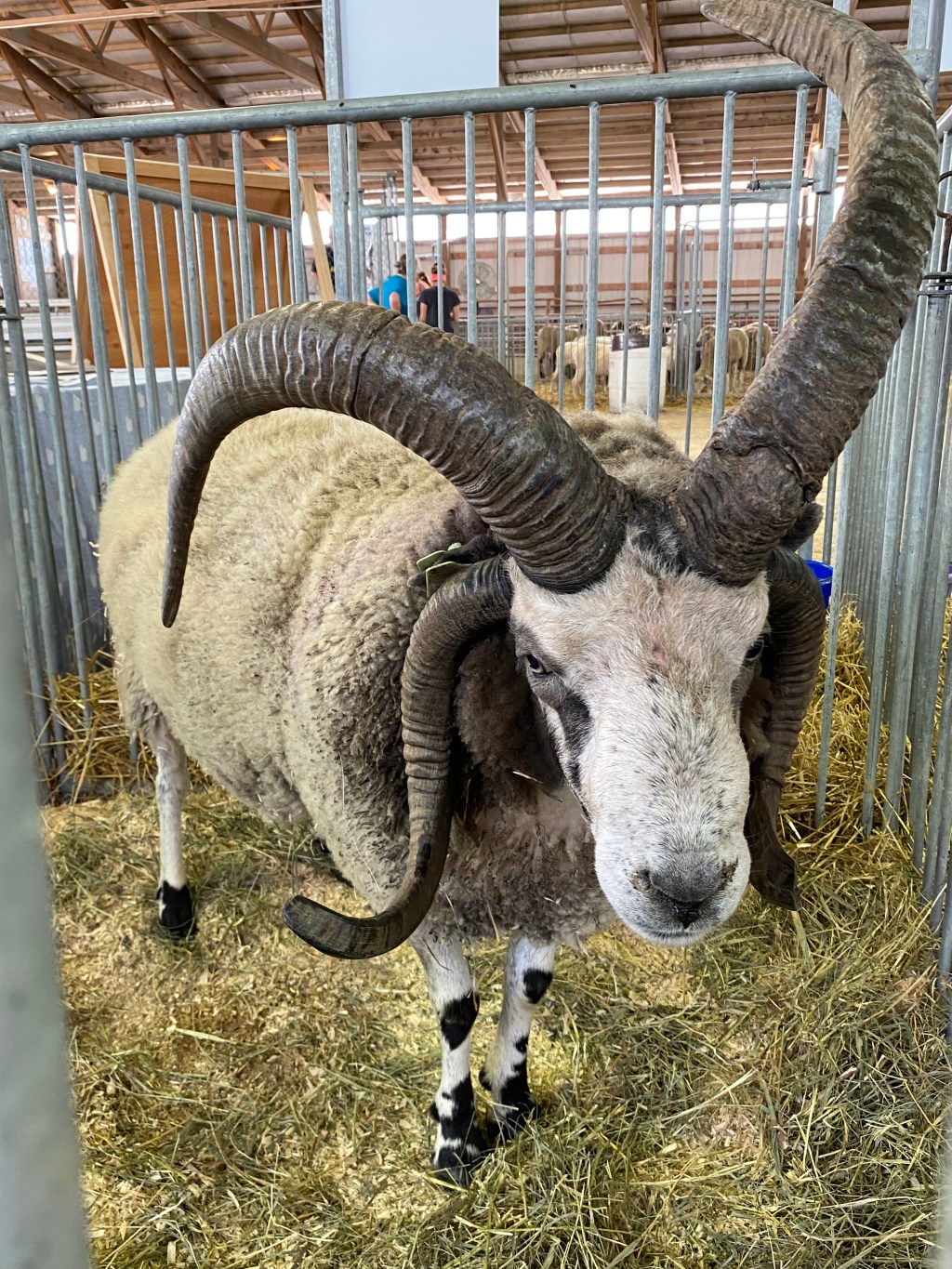
I’m writing a children’s book about a sheep and he happens to have horns. I had a funny scene where my sheep gets a banana stuck on his horn. Someone in my critique group commented that sheep don’t have horns, it’s misleading and I should change that.
I chuckled to myself, and scratched her off the next critique cycle. I sent her a few pictures to get her up to speed on sheep. There are so many varieties. This one happens to be a Jacob sheep. And YES, some sheep have horns.
I was introduced to this sheep at a Fiber Festival I went to. Not all of the Jacob sheep have 2-4 horns, but this one did. I’ve always loved quirkiness and fell in love with his huge horns and his skinny black/white legs.
Jacob sheep came to North America from England in the mid-1900s. They are generally raised for their wool, meat and hides. They are a strong sheep, so well liked by small flock holders.
There is a Biblical account indicating that Jacob bred spotted sheep, so that is where the name, Jacob sheep came from. Here was a nice write up of the Jacob sheep.

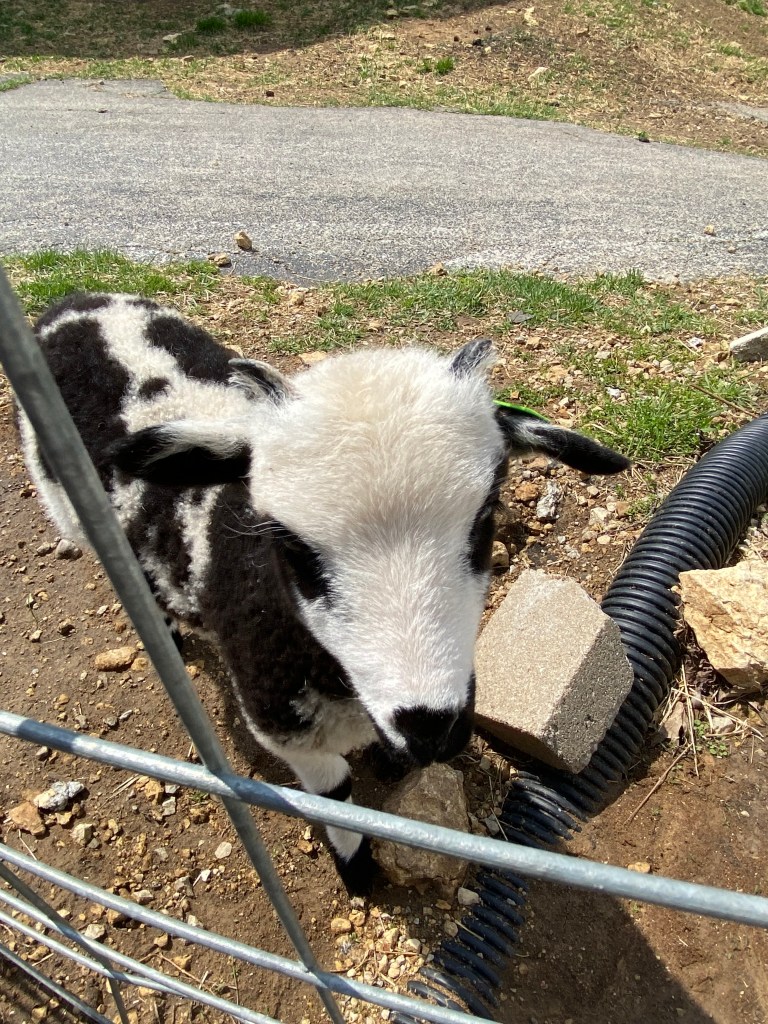
Last weekend, I went to a small Fiber Mill. Look how cute, little lambs, little horns.

While I don’t knit a lot, when I do, I normally go to a small shop for yarn. When I went to the different Fiber Fairs, I was amazed to learn that there are so many small Fiber Mills in the U.S. producing yarn to sell. I would like to support them, buy their yarn. They work so hard.
Blue Mountain Fiber Mill and Farm in Pennsylvania is up for sale. You can see here.
Life is amazing, how an interest in sheep, opened the door to new and wonderful Fiber Mills to visit.


 Spark of Inspiration
Leave a reply to Anonymous Cancel reply